
June note
On Material, Meaning and the New Generation of Artisan Concrete
The objects we choose to live with are rarely mere objects.
The best pieces—the ones we keep, restore and carry with us through different different seasons of life—possess something beyond function. They contribute to atmosphere. They invite touch. They develop a quiet familiarity through daily use and, over time, become woven into the architecture of our lives.
Perhaps this is why there has been a renewed appreciation for materials that reveal rather than conceal their nature. Timber that carries its grain. Stone marked by geological time. Linen that softens with age. Materials that are honest enough to show where they have come from, and resilient enough to become more beautiful through use.
Artisan concrete belongs to this conversation.
At its best, it is not a substitute for stone or ceramic, nor an industrial material repurposed for the home. It is a medium with its own language—one that speaks of permanence, tactility and restraint. Every piece carries the subtle evidence of its making: the gentle movement of the surface, the slight variation in tone, the individuality that can only emerge when an object is shaped by hand.
Yet the concrete of today is not the concrete of yesterday, nor even a mere decade ago.
As designers and architects began embracing the material, the industry itself was evolving. What started as a community of makers tinkering with a centuries-old medium has developed into a global exchange of knowledge between artisans, engineers and material specialists. Through years of testing, refinement and a deeper understanding of concrete chemistry, a new generation of high performance concrete technologies has emerged—lighter, stronger and more stable than ever before.
Importantly, this evolution has shifted the focus away from surface treatments and towards the integrity of the material itself. Lasting quality is not achieved by applying a finish to mask weakness; it begins with designing strength, density and durability into the concrete from the very beginning. The surface simply reveals what already exists beneath it.
In many ways, this reflects a broader philosophy of design. Authenticity cannot be added at the end of a process. It is embedded from the outset—in the choice of materials, the patience of the maker and the quiet confidence to let an object be exactly what it is.
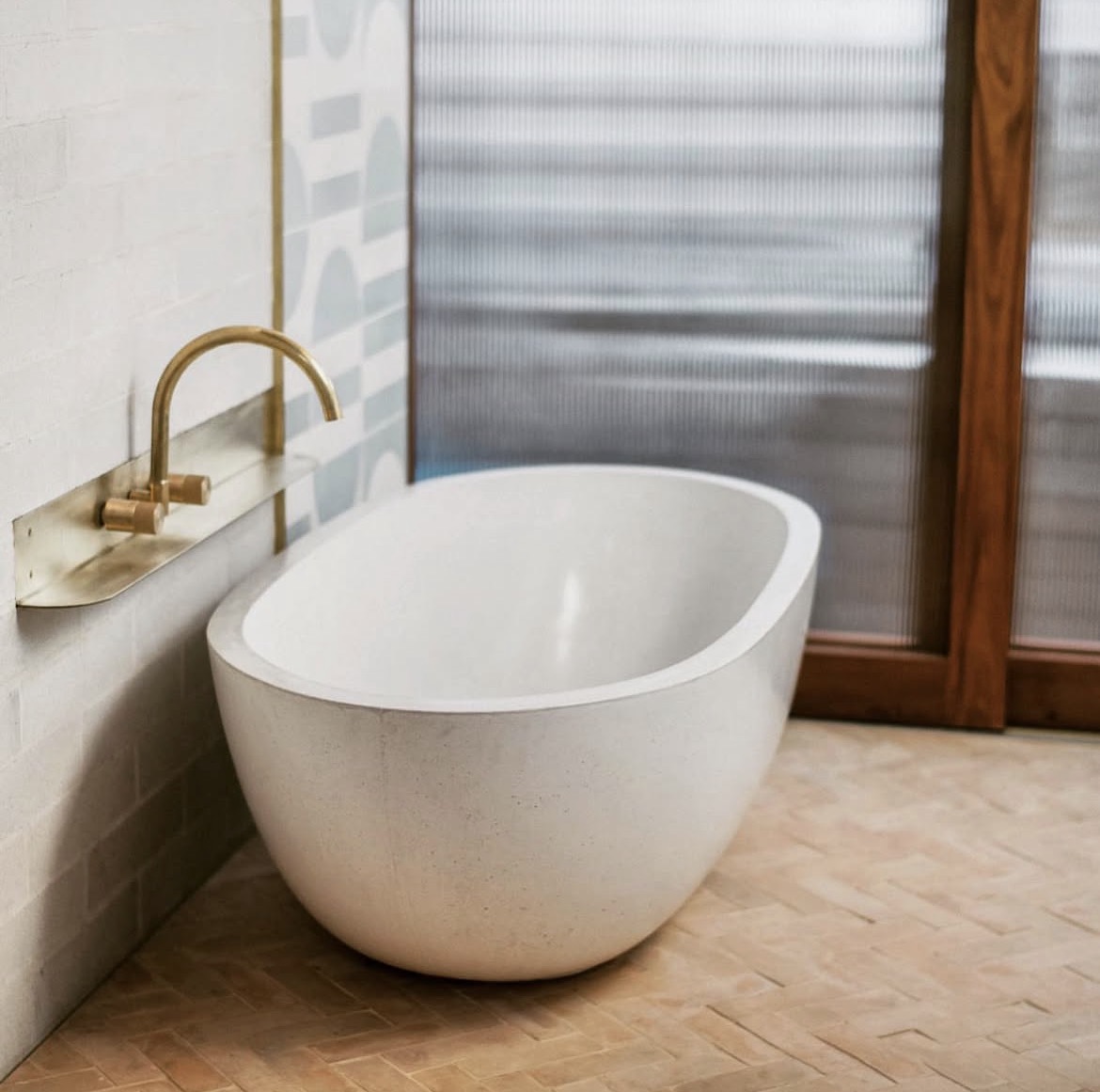
At MUUD Bathware, this is what draws us to artisan concrete. Not because it is a trend, but because it belongs to a longer conversation about beauty, permanence and the human desire to surround ourselves with things that carry meaning. We see our concrete baths and basins not as sanitary ware, but as enduring architectural objects—pieces designed to sit comfortably alongside natural stone, timber and similar timeless materials.
The evolution of modern concrete has simply allowed the material to fulfil that promise. Advances in technology and craftsmanship have given makers the confidence to create with greater precision and longevity, while preserving the tactile, imperfect beauty that made concrete so compelling in the first place.
Because the most enduring materials are rarely those that seek perfection. They are the ones that age gracefully, tell the truth about how they were made, and quietly become part of the story of the spaces they inhabit.