
July note
The Beauty of Materials That Tell the Truth
There is a growing desire within contemporary architecture to return to materials that feel honest.
Not perfect.
Not manufactured into uniformity.
Simply honest.
Stone reveals the passing of geological time. Timber carries the memory of the tree from which it came. Bronze slowly deepens with touch. Linen softens through years of use.
Their beauty lies not in resisting change, but in accepting it.
Perhaps this is why they continue to appear, century after century, in the world’s most enduring interiors.
Concrete belongs quietly within this family.
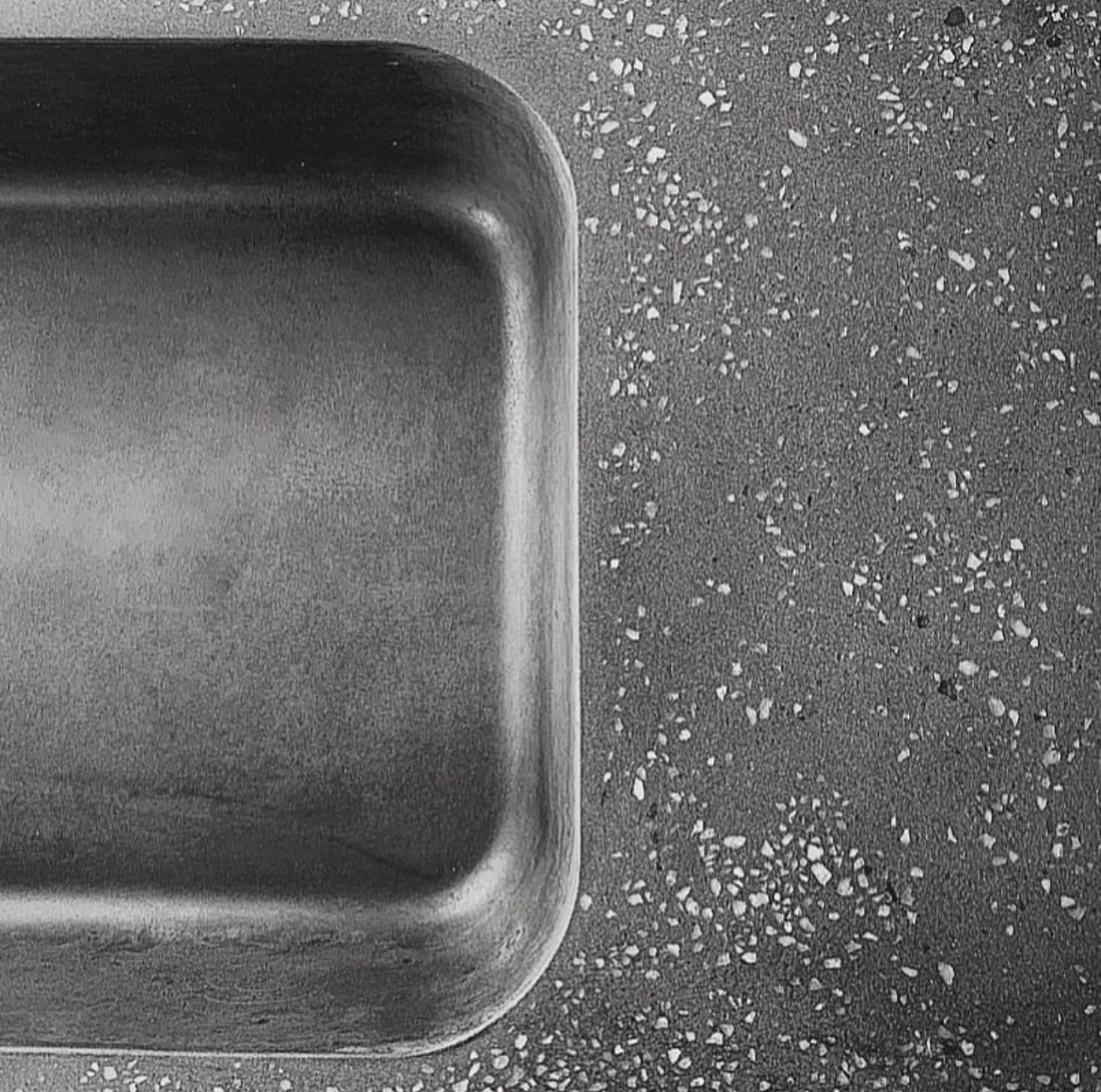
Often misunderstood as an industrial material, artisan concrete shares many of the qualities we admire in natural stone. It possesses subtle movement, variation in tone and a tactile warmth that can only be appreciated through touch. Each piece is shaped by hand. Each carries the quiet evidence of its making.
There is a tendency in modern culture to expect materials to remain exactly as they were on the day they were installed. Yet history suggests otherwise.
The buildings that continue to inspire us today—the monasteries of Europe, centuries-old villas, weathered courtyards and ancient public spaces—have never been admired because they resisted time. They are admired because time became part of their beauty.
The same is true of the objects we choose to live alongside.
A handcrafted dining table gathers the marks of shared meals. A leather chair develops a softness impossible to manufacture. Limestone wears gently beneath footsteps until it feels entirely at home within its setting.
These changes are not imperfections.
They are evidence of life.
Modern GFRC and UHPC have transformed what artisan concrete is capable of achieving. Through decades of refinement in material science, today’s high-performance concrete offers remarkable strength, stability and longevity while preserving the authenticity that first drew designers to the material.
Technology has improved.
The philosophy has remained unchanged.
The finest materials have always invited us to appreciate them differently—not as objects to preserve in perfect condition, but as companions that quietly mature alongside the spaces they inhabit.
Perhaps this is why handcrafted materials continue to resonate so deeply.
They remind us that beauty is rarely found in perfection.
It is found in truth.
And the finest materials are not those that resist time, they are those that reveal it.